INDUCTIVELY COUPLED
PLASMA MASS
SPECTROMETRY
INDUCTIVELY COUPLED PLASMA MASS SPECTROMETRY
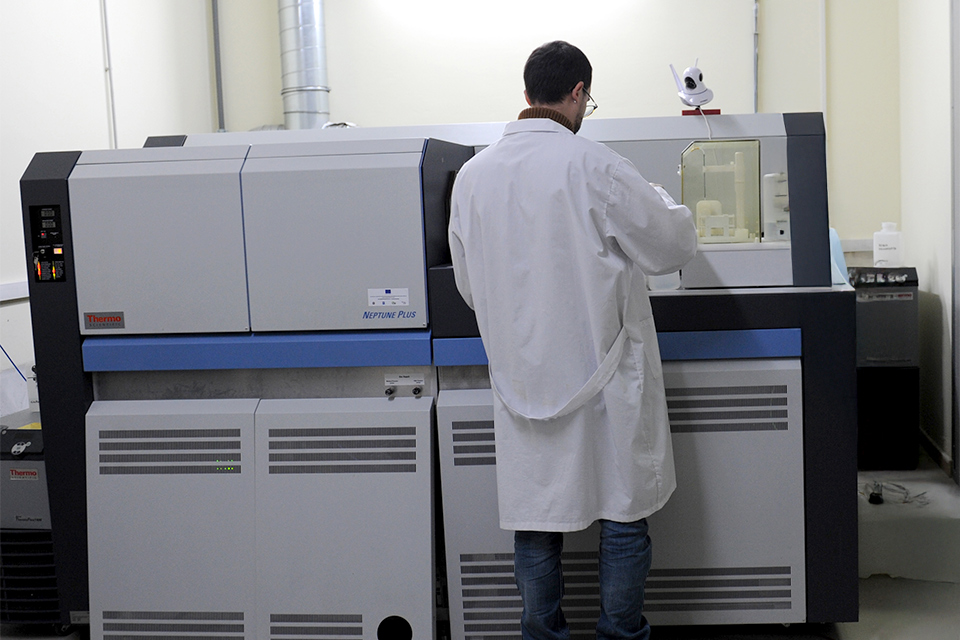
The CIRCE ICP-MS laboratory accommodates a Neptune Plus ThermoFisher MC-ICP-MS, a versatile instruments which is suitable for measurements of isotopic ratios of a wide range of elements. Detection of ions is generated by an inductively-coupled plasma torch through a double-focusing (ESA MAGNET) mass analyzer onto a variable multicollector detector array. The double-focusing mass analyzer is the best technical solution to ensure an accurate separation of masses focused onto focal plane, along which ion detectors can be brought into precise alignment with the different ion beams. The water-cooled laminated magnet ensures the user can quickly switch between different applications.
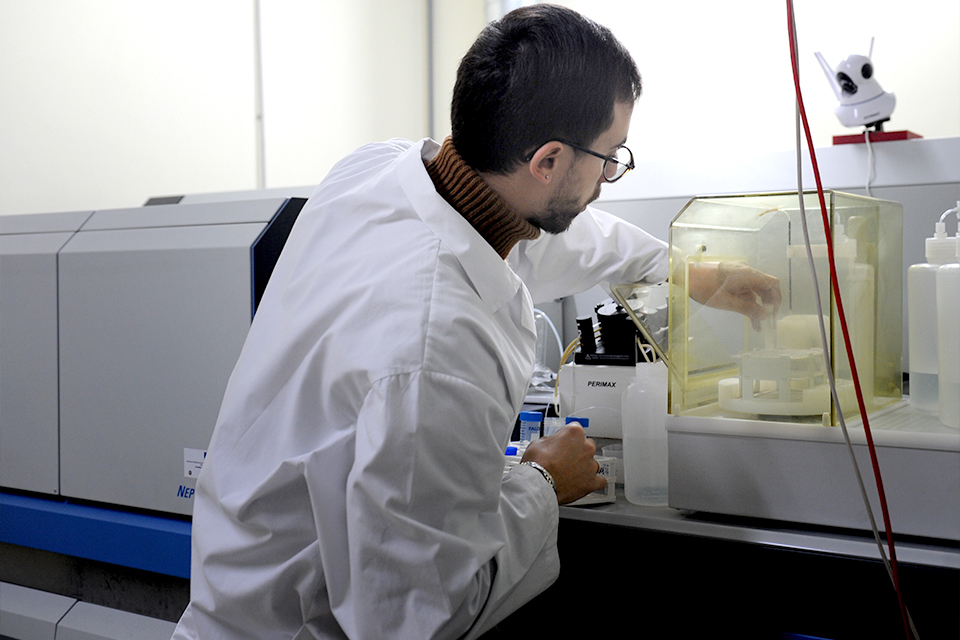
The Neptune MC-ICP-MS utilizes a 10 kV acceleration voltage, which maximizes transmission and minimizes mass discrimination through the mass analyzer. Combined with proven ion transfer optics and ICP technology, the Neptune plus MC-ICP-MS delivers exceptional accuracy, mass bias stability and sensitivity. The plasma interface of the Neptune plus is held at ground potential, allowing safe access to the nebulizer, spray chamber and torch.
In order to achieve the high mass resolution necessary to separate molecular interferences from elemental peaks a narrow source slit is selected. Through a combination of narrow source and wide detector slits, interferences can be separated from the analyte ions on either side of the detector slit. The majority of molecular interference are in the low and middle mass range, and according to the systematics of the nuclear mass defect, these interferences are typically heavier than the elemental species.
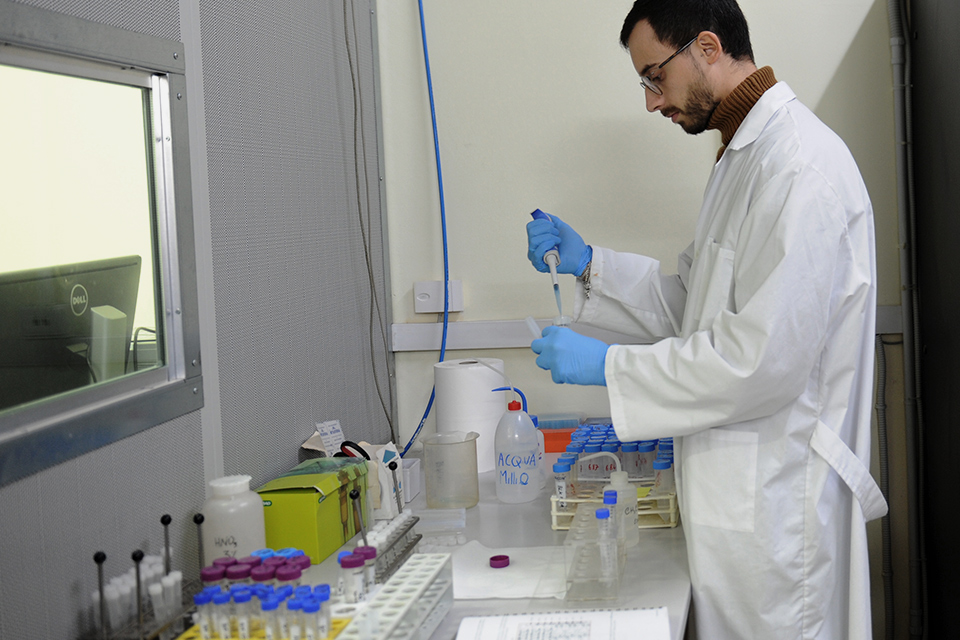
At present several preparation methodologies have been set up and developed at CIRCE lab in ultralow contamination conditions. During the first semester of 2019 a ISO4 clean room was delivered. Currently different elements isotope ratios are measured in the lab aiming for different applications in environmental pollution, hydrology, nuclear safeguards, archaeometry, food traceability.