
FORENSIC
The decreasing trend of the radiocarbon pulse produced during the atmospheric tests of nuclear weapons (bomb-carbon) coupled with high sensitivity accelerator mass spectrometry (AMS) measurements, drastically increased the precision of radiocarbon age determinations since the second part of the sixties, allowing the application of radiocarbon AMS to a wide range of studies previously not directly involving conventional radiocarbon dating, and in particular several forensic applications.
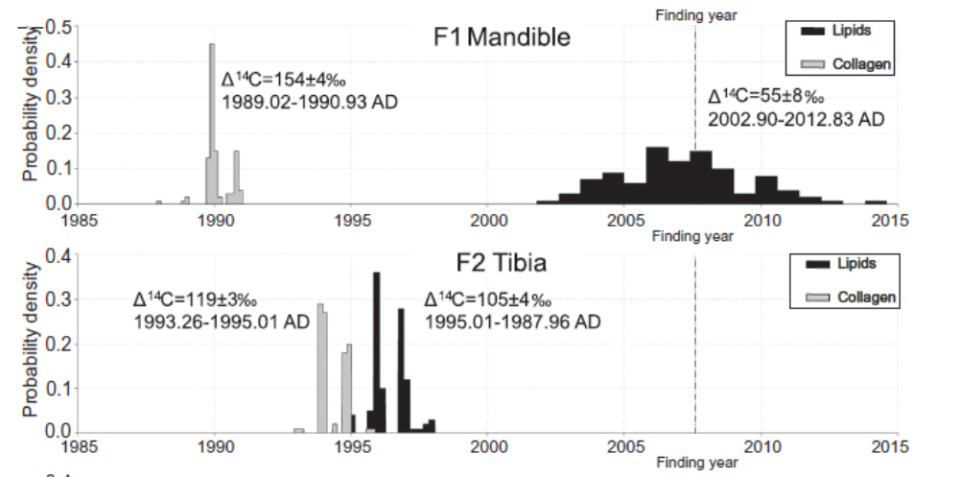
Bomb-Carbon dating on the lipid and collagen fractions of bones allowed us the evaluation of the year of the death of individuals by means of ad hoc calibration data sheet with the typical few years precision. Coupling the precision of bomb-pulse measurements with analyses aimed at establishing the species of trees used for paper production, we also could contribute, in collaboration with the Scientific Police to the solution of judiciary cases involving the authentication of paper documents.
In the framework of authenticity evaluation of artworks, the chronological characterization of the wooden support of paintings and the Radiocarbon Dating evaluation of its age allows, in combination with other investigation, to attribute the artworks, as I was the case with the “Acerenza portrait” attributed to Leonardo da Vinci.